
MAX3093E Datasheet
±15kV ESD-Protected, 10Mbps, 3V/5V, Low-Power Quad RS-422/RS-485 Receivers
±15kV ESD-Protected, 10Mbps, 3V/5V, Low-Power Quad RS-422/RS-485 Receivers
| Part No. | In Stock | Price | Packaging | SPQ | Marking | MSL | Pins | Temp Range | Package Description |
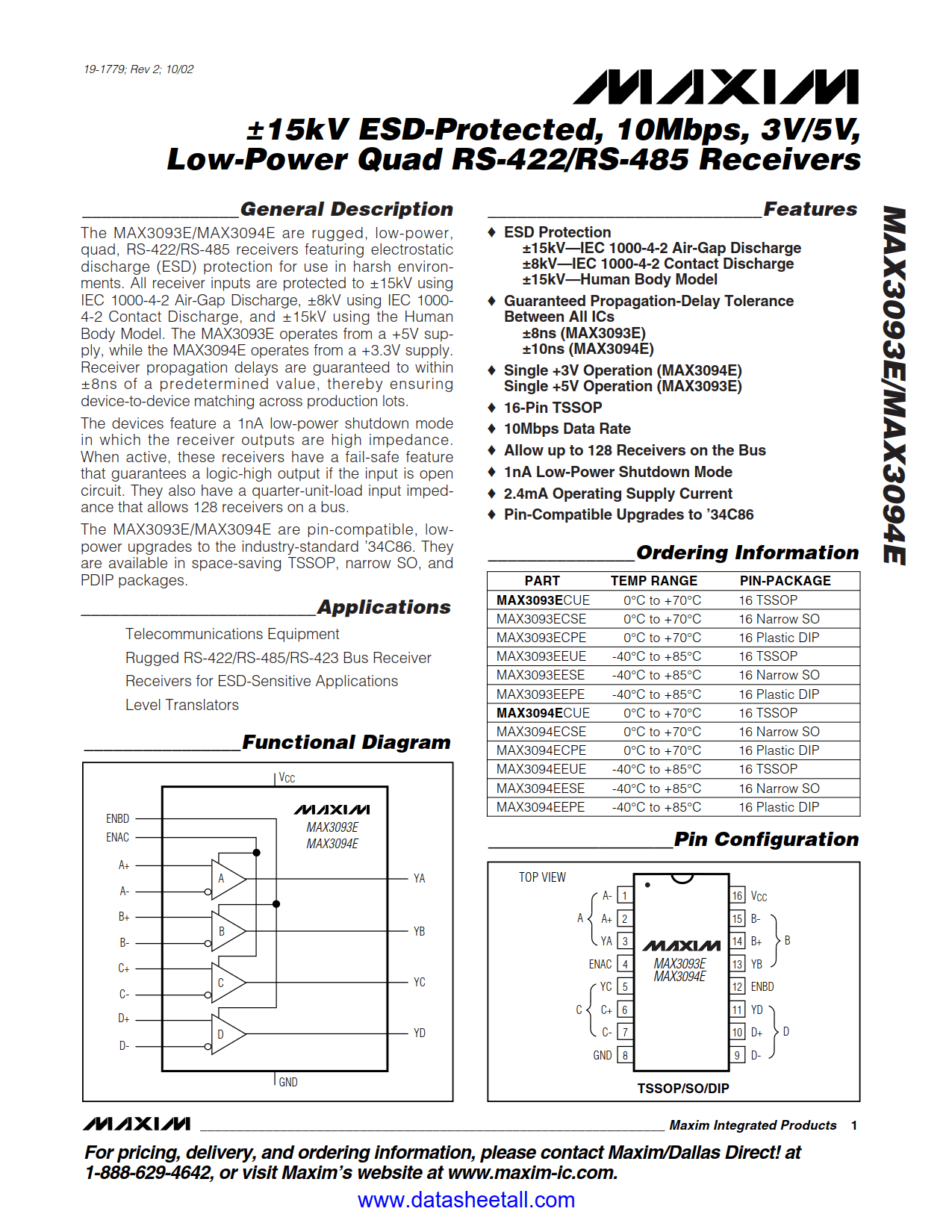
The MAX3093E are rugged, low-power, quad, RS-422/RS-485 receivers featuring electrostatic discharge (ESD) protection for use in harsh environments. All receiver inputs are protected to ±15kV using IEC 1000-4-2 Air-Gap Discharge, ±8kV using IEC 1000-4-2 Contact Discharge, and ±15kV using the Human Body Model. The MAX3093E operates from a +5V supply. Receiver propagation delays are guaranteed to within ±8ns of a predetermined value, thereby ensuring device-to-device matching across production lots.
The devices feature a 1nA low-power shutdown mode in which the receiver outputs are high impedance. When active, these receivers have a fail-safe feature that guarantees a logic-high output if the input is open circuit. They also have a quarter-unit-load input impedance that allows 128 receivers on a bus.
The MAX3093E are pin-compatible, low-power upgrades to the industry-standard '34C86. They are available in space-saving TSSOP, narrow SO, and PDIP packages.